

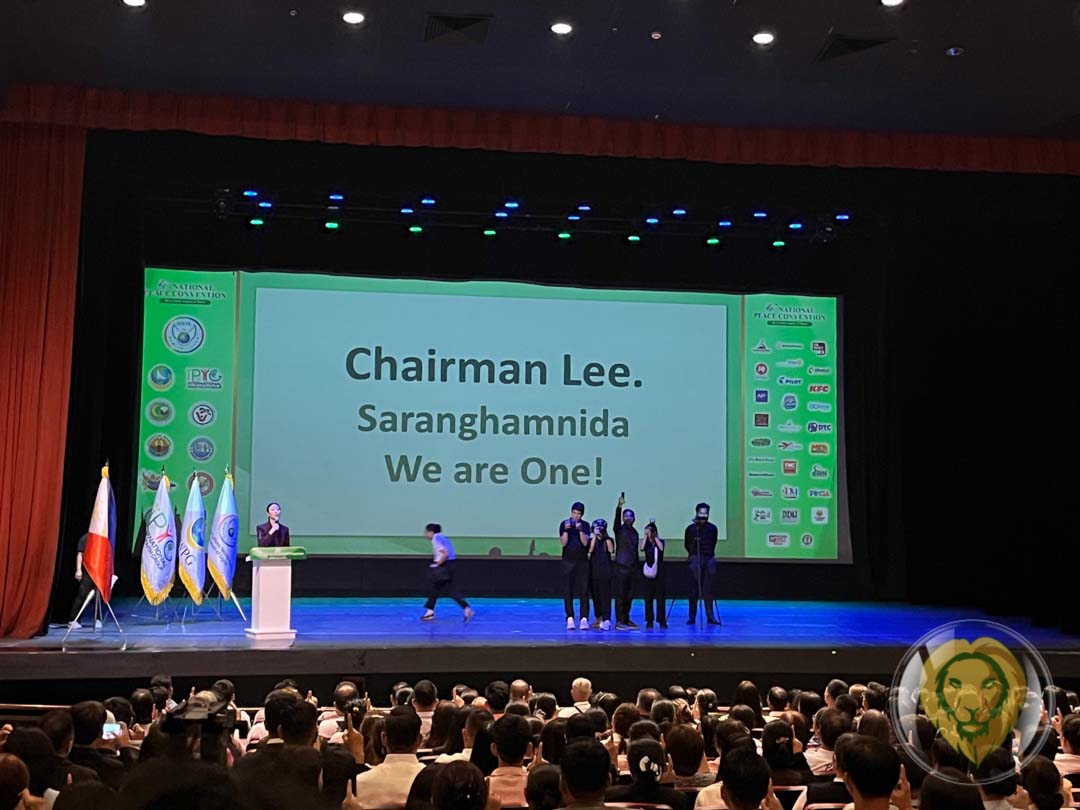
The University of the East Theatre in Manila became a meeting point for people from different sectors as around 1,000 representatives gathered for the 4th National Peace Convention on October 3, 2026.
With the theme “Be a Living Legacy of Peace,” the convention brought together representatives from government, education, religious organizations, youth and women’s groups, media, civil society, and other communities for a day of discussions centered on peacebuilding and civic participation.

The event moved beyond the usual definition of peace as simply the absence of conflict. Throughout the program, speakers discussed peace in relation to education, research, leadership, youth participation, interfaith understanding, and collaboration—areas where participants can contribute within their respective communities.
The gathering opened with a welcome message from John Rommel T. Garces, followed by congratulatory messages from Senator Win Gatchalian, Senator Chiz Escudero, and Senator Bam Aquino.
From the opening program, the convention established its central message: building a culture of peace requires participation from different parts of society.
One of the featured sessions was “Why the HWPL Case Study Matters,” which explored experiences and initiatives connected to peacebuilding and the importance of collective action.
Dr. Nassef Manabilang Adiong, Director of Policy Research and Legal Services of the BARMM Parliament, shared perspectives on initiatives involving scholarship, documentation, and collaboration.

Among the examples discussed were the Contemporary Bangsamoro Book Writing Workshop and the 2nd Book Workshop held at MSU-IIT in Iligan City.
The initiatives demonstrated how bringing people from different academic and professional backgrounds together can create a broader understanding of complex issues surrounding peace and conflict.
Adiong also emphasized the value of collective scholarship, pointing to the contributions that can come from historians, legal and policy scholars, and individuals working in areas such as culture, religion, and international relations.
The discussion gave the audience a glimpse into another side of peacebuilding—one that happens through research, writing, documentation, and the exchange of perspectives.
<iframe src=”https://www.facebook.com/plugins/video.php?height=476&href=https%3A%2F%2Fwww.facebook.com%2Freel%2F2253728292075850%2F&show_text=false&width=267&t=0″ width=”267″ height=”476″ style=”border:none;overflow:hidden” scrolling=”no” frameborder=”0″ allowfullscreen=”true” allow=”autoplay; clipboard-write; encrypted-media; picture-in-picture; web-share” allowFullScreen=”true”></iframe>
The convention then turned toward the individual role in peacebuilding through a presentation by Mrs. Erlinda Olivia Tiu, Vice President of the National Federation of Women’s Clubs of the Philippines.
Tiu presented four steps toward becoming a peace leader: becoming a learner, becoming a voice, becoming a partner, and becoming a leader.
The framework placed emphasis on the idea that leadership can begin before someone holds an official position.
Learning about an issue, finding the courage to speak, working alongside others, and eventually taking on leadership responsibilities can all form part of an individual’s participation in peacebuilding.

For the audience, the presentation connected the larger theme of the convention to something more personal. Becoming part of a culture of peace does not necessarily require waiting for an opportunity to lead. Participation itself can be an initial step.
Youth participation was another major focus of the convention, particularly through the International Peace Youth Group (IPYG).
Mr. Adzhar Madjid, Director of the World Assembly of Muslim Youth, presented “Be a Living Legacy of Peace: Become an IPYG Ambassador.”
The presentation highlighted opportunities for young people to become involved in peace-related activities and community engagement.
The emphasis on youth participation reflected the convention’s focus on building a lasting legacy. Young people were discussed not merely as future leaders but as participants who can already contribute to their communities.
The presentation also complemented the convention’s wider discussions on education and leadership, showing how young people can move from learning about peace to becoming involved in initiatives that promote it.
Peace education also figured prominently throughout the program.
Dr. Antonio P. Faustino Jr., Assistant Schools Division Superintendent of the Schools Division Office of Cavite, represented the education sector and contributed perspectives on the role of schools in promoting peace education.
The discussion highlighted the importance of developing young people who understand respect, dialogue, and peaceful coexistence.
The convention also presented information about peace initiatives in the Philippines, citing a network consisting of 116 Peace Learners, 104 Peace Instructors, four Peace Committees, two Peace Chapters, two Peace Monuments, and 13 Peace Partners.
The initiatives reflected how peace education can extend beyond a single classroom or institution through community activities and partnerships.
The local government perspective was represented by Hon. Shannin Mae Olivarez-Bernardo, Councilor of the City Government of Parañaque.

Meanwhile, Ali Maruhom Jr., Chief of the Peace Building and Conflict Resolution Division of the National Commission on Muslim Filipinos–NCR, brought a perspective focused on peacebuilding and conflict resolution.
Their participation added government and public-sector perspectives to the discussions, complementing the contributions of educators, researchers, youth advocates, and civil society representatives.
Another part of the convention focused on the role of peace centers in encouraging people from different religious backgrounds to learn from one another.
Programs involving Hinduism, Islam, Catholicism, and non-denominational Christianity were highlighted as examples of initiatives designed to encourage interfaith understanding.
The conversation emphasized the value of creating spaces where people can become more familiar with different religious beliefs and traditions.
The program also introduced opportunities for individuals interested in becoming involved in peace initiatives through HWPL membership.
Information presented during the event indicated an annual membership fee of ₱1,200, equivalent to ₱100 per month. Membership support was presented as contributing to initiatives such as peace education in schools, interfaith activities, youth leadership programs, peace journalism workshops, peace clubs, peace monuments, peace corners in libraries, relief activities, and community clean-up drives. (with reports from Aljay Nevarez)
The post 4th National Peace Convention brings diverse voices together to keep the conversation on peace alive appeared first on LionhearTV.
Article origin: https://www.lionheartv.net/2026/10/4th-national-peace-convention/?utm_source=rss&utm_medium=rss&utm_campaign=4th-national-peace-convention
Original author: Jeriemay Polidario


